







Turnover rates in retail, hospitality, healthcare and logistics continue to outpace nearly every other sector, and the cost is staggering. In retail alone, the monthly turnover rate hit 4.1% compared to 3% across all industries. According to SHRM, replacing a single employee can cost up to 200% of their annual salary when you factor in recruiting, onboarding, training and lost productivity.
So, what does it take to keep hourly workers engaged and on the job? Most employers' first instinct is to raise wages or improve health coverage. But here's what the data and the employees are telling us: it's not enough.
The hourly workforce wants benefits that are cognizant of and address day-to-day financial pressures, unpredictable schedules, and limited access to traditional financial tools.
And the employers who are winning the talent war are the ones who've figured out how to deliver exactly that.
Why Traditional Benefits Miss the Mark for Hourly Workers
Among organizations that offer benefits, health insurance is the most common offering - 86% of employers currently provide it, according to isolved's Voice of the Workforce report.
Consider the reality of the frontline workforce:
- Unpredictable schedules make it hard to budget and plan financially around bi-weekly pay cycles
- Variable income creates financial stress that a 401(k) match doesn't solve
- High cost-sharing - the out-of-pocket costs employees pay for deductibles and copays on health plans can feel out of reach on an hourly wage
- Rigid PTO policies don't flex around irregular shifts
The result is a workforce that feels undervalued, stressed, and constantly seeking better opportunities.
Alternative Benefits That Work for Hourly Employees
Forward-thinking human resources (HR) leaders are rethinking their benefits strategy from the ground up. A new category of alternative benefits is proving remarkably effective at improving retention, engagement, and financial wellness.
Earned Wage Access (EWA)
Earned wage access allows employees to access a portion of wages they've already earned before their scheduled payday without loans or predatory fees.
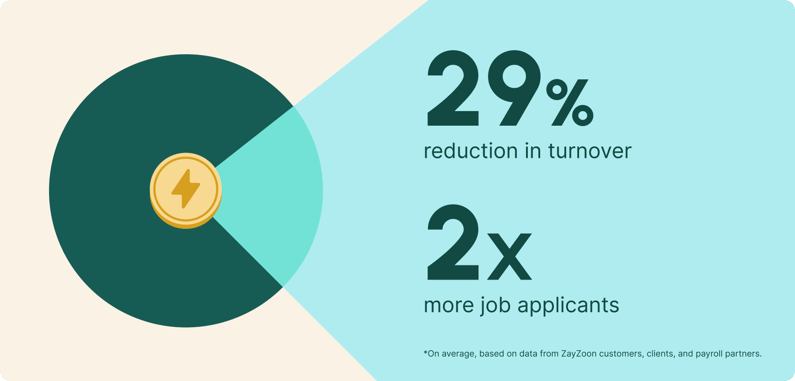
For hourly workers living paycheck to paycheck, this benefit is transformative. According to ZayZoon, businesses that offer earned wage access see up to a 29% reduction in turnover and report attracting two times more job applicants. In addition, 70% of the 5,400 employees surveyed by ZayZoon said they would choose a job that offers EWA over one that doesn't.
Financial Wellness Programs
Beyond access to wages, employees want help making their money go further. Financial wellness programs, including budgeting tools, debt management resources, and savings guidance, address the root causes of financial stress rather than short-term solutions.
These programs are especially meaningful for hourly workers who may not have access to financial advisors or planning tools through other means. When employers provide this support, it signals a genuine investment in employees' long-term well-being.
Flexible Scheduling and Shift Control
Autonomy over scheduling is increasingly one of the most valued benefits an employer can offer hourly workers. Platforms that allow employees to swap shifts, pick up extra hours, or set availability preferences give workers something money can't buy: control over their time.
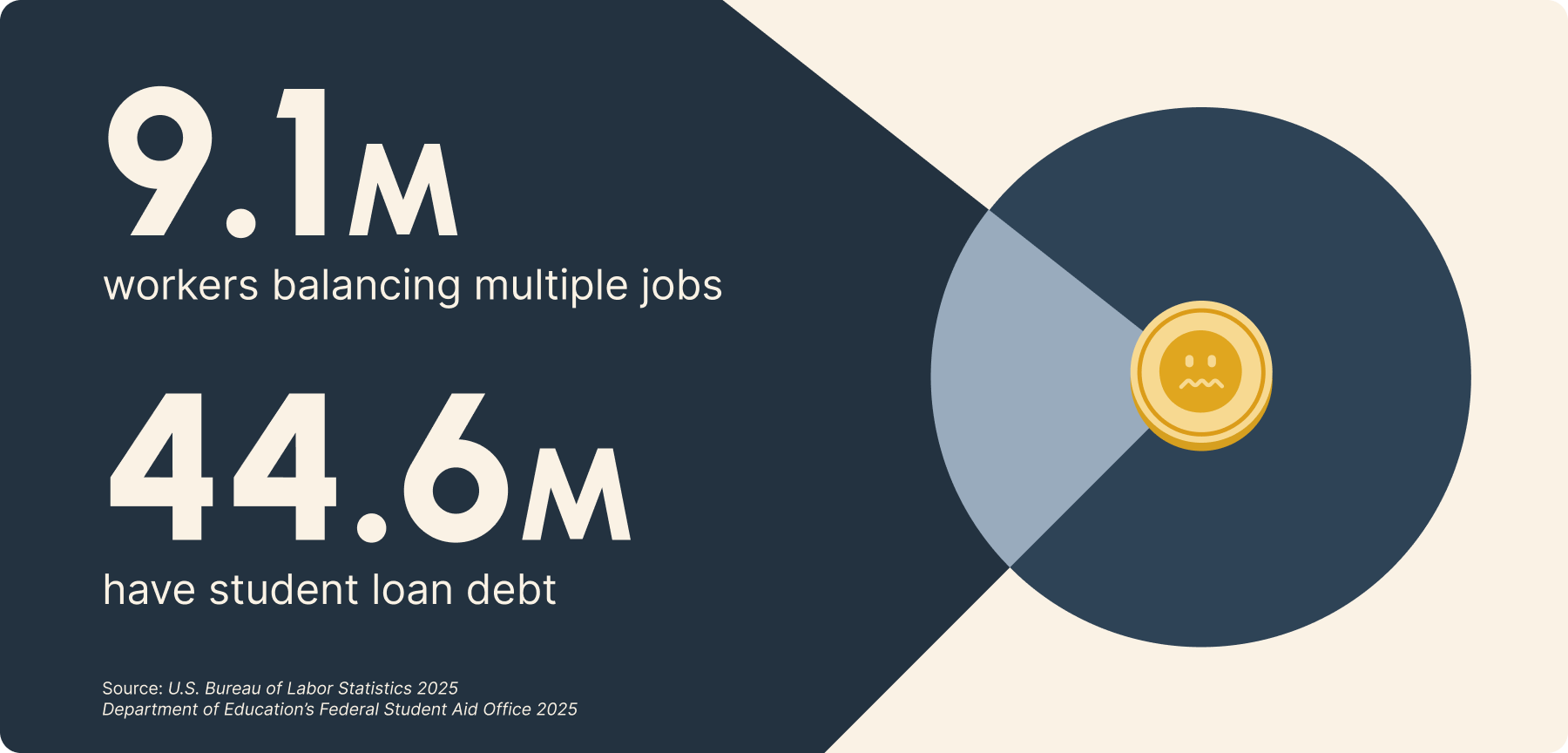
This is especially resonant for workers balancing multiple jobs, a group that has grown to more than 9.1 million people in the United States as of early 2025, according to the U.S. Bureau of Labor Statistics.
Mental Health and Well-Being Support
Employee Assistance Programs (EAPs) have been around for decades, but a new generation of mental health benefits is redefining what employer support looks like. Access to virtual therapy, mental health apps, and crisis support with low or no out-of-pocket cost is becoming a meaningful differentiator.
Mind Share Partners' 2025 Mental Health at Work Report found that frontline workers report higher levels of burnout than other employee groups, and that employees at companies that support their mental health are twice as likely to report no burnout or depression. For this workforce, mental health support is a signal that the employer sees the whole person, not just the shift.
Student Loan Repayment and Education Assistance
Student loan debt follows many workers into the workforce. According to the Department of Education's Federal Student Aid Office, 44.6 million Americans carry federal student loan debt. Employers who offer even modest student loan repayment contributions or who help employees access continuing education benefits are differentiating themselves in ways that salary alone cannot match.
Following recent legislative changes, contributions to employees' student loan repayment can be structured as a tax-advantage benefit, making it more accessible for employers to offer.
Building a Benefits Strategy That Works for Your Workforce
Offering the right alternative benefits starts with understanding the workforce, not making assumptions.
Here's how to get started:
- Survey employees. Annual engagement surveys are a start, but pulse surveys and stay interviews give richer, more timely signals. Ask hourly employees directly: What's causing you stress? What would make it easier to stay?
- Segment by workforce type. A benefits strategy that works for salaried employees won't necessarily work for part-time shift workers. Consider building separate benefits tiers or options that reflect the realities of different employee groups.
- Make benefits accessible. The most thoughtful benefits program won't move the needle if employees can't easily find, understand or enroll in what's offered. Mobile-first enrollment tools and plain-language communications are essential, especially for a workforce that may not be sitting at a desk. Look for voluntary benefits that integrate into tools your workforce already uses.
- Measure what matters. Track benefits utilization alongside retention and engagement data. If a benefit isn't being used, that's useful information. It may mean awareness is low, access is difficult or the benefit doesn’t resonate with a specific workforce.
The Business Case is Clear
Employers are starting to measure what these benefits return, and productivity tops the list.
EBRI's 2025 Financial Wellbeing Employer Survey found that when employers evaluated the return on investment (ROI) of their financial wellness programs, improved productivity and performance was the most commonly cited factor in their cost/benefit analysis, ranking above absenteeism reduction and healthcare cost savings. When employees are financially stable and supported, they show up more consistently, more focused, and more engaged.
The challenge is whether your current benefits strategy is keeping pace with what the hourly workforce actually needs.
Ready to Rethink Your Benefits Strategy This Open Enrollment Season?
Open enrollment is one of the best opportunities to step back, access what's working, and introduce benefits that make a real difference for your employees.
Download isolved's Guide to Open Enrollment for practical guidance on structuring your benefits strategy, communicating changes to employees, and making this open enrollment season your most successful yet.